Educational content. Not legal or medical advice. Product links may be affiliate links; as an Amazon Associate we earn from qualifying purchases. 10% of BambooTide net proceeds support verified ocean cleanup.
Why a home plastic audit matters
Most ocean plastic starts on land. Packaging, bags, bottles, and single-use items used at home become litter or waste that can reach rivers and coasts. International cleanups repeatedly find the same everyday objects — bottles, caps, bags, wrappers, straws — on beaches worldwide.
Global plastic production is measured in hundreds of millions of tonnes per year. Under business-as-usual scenarios, plastic waste is projected to grow sharply in coming decades. A home audit will not solve the system alone — but it shows where your household’s plastic is concentrated so you can change the few items that show up every week.
Land → sea
NOAA notes plastics are the most common marine debris, often from daily items like bottles, bags, and food packaging.
Top trash
Ocean Conservancy’s International Coastal Cleanup consistently finds food wrappers, bottles, bags, and straws among top items.
Packaging
UNEP highlights packaging as a major share of plastic waste — exactly what shows up in kitchens and bathrooms.
Sources: NOAA — Plastics in the ocean · Ocean Conservancy — International Coastal Cleanup · UNEP — Plastic pollution · IUCN — Plastic pollution brief
How to run the audit (20 minutes)
- Pick one room — bathroom first is easiest; then kitchen; then bags/car.
- Open drawers and under the sink — the audit fails if you only scan the counter.
- Mark what you find on the checklist: single-use, multi-use plastic, or already swapped.
- Circle the “weekly plastics” — items you throw away every 1–2 weeks (bags, wraps, bottles, floss picks).
- Choose 1–3 swaps when empty — don’t landfill good items early; replace at natural end-of-life.
BambooTide rule
Progress over perfection. One high-frequency plastic removed beats ten “maybe later” purchases.
Food waste reduction often beats packaging swaps for climate — pair this audit with better leftovers storage.
Printable checklist
Use the button below to print only this checklist (one clean page). Check what you have. Star weekly items. Replace when empty or worn.
BambooTide · Free tool
Plastic audit checklist
Check what you find · Replace when empty or worn
Date: ____________________
Home / room: _______________
Bathroom
Kitchen
Bags, laundry & daily carry
Next 3 swaps (when empty)
Tip: star (★) items you throw away every week first.
Full guide & sources: bambootide.org/plastic-audit
10% of BambooTide net proceeds → ocean cleanup
Bathroom: high-frequency plastics
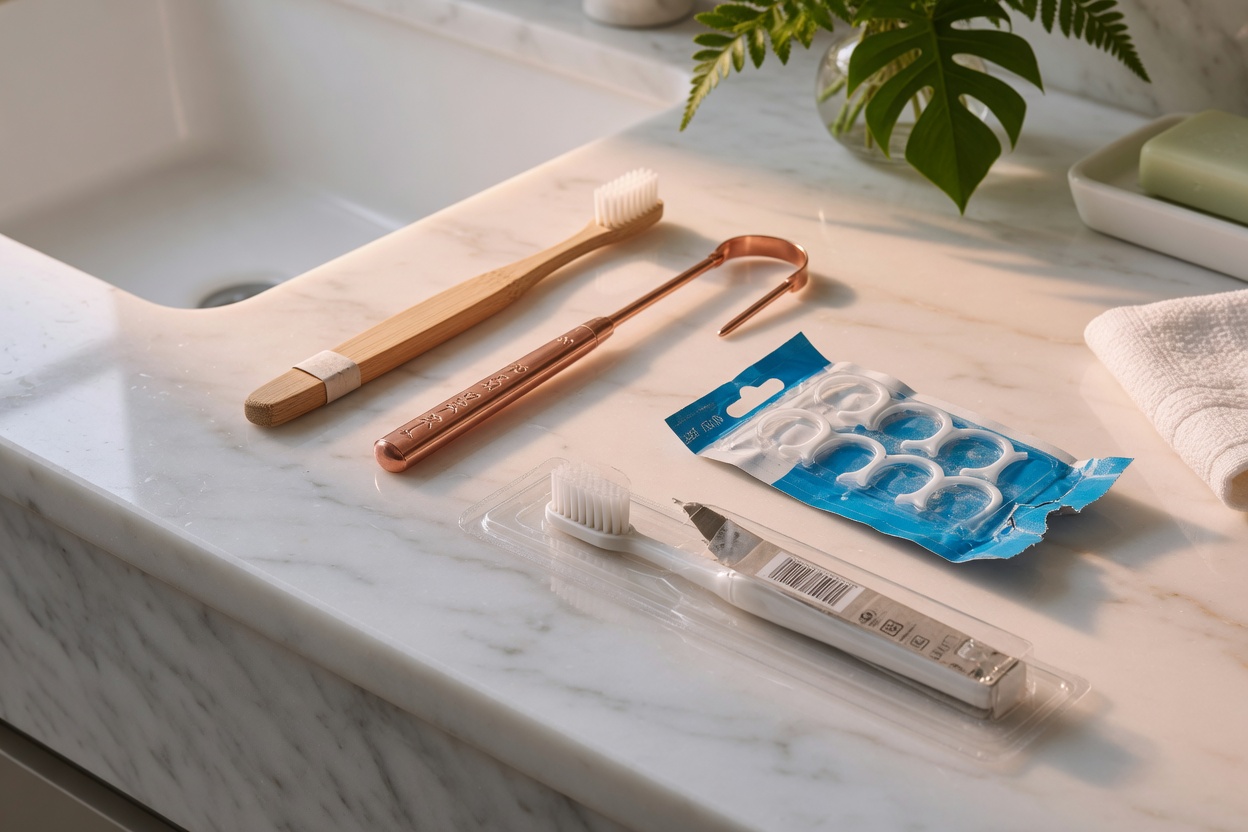
Bathrooms hide small plastics that empty fast: brush handles, floss picks, cotton buds with plastic sticks, and disposable rounds. These rarely dominate household weight, but they dominate item count and litter lists when they escape trash systems.
Microplastics also matter here: some rinse-off products historically used microbeads; textiles shed microfibres in the wash. Prefer products without plastic scrub beads, and wash synthetics in fuller loads when possible.
Kitchen: packaging + reusables
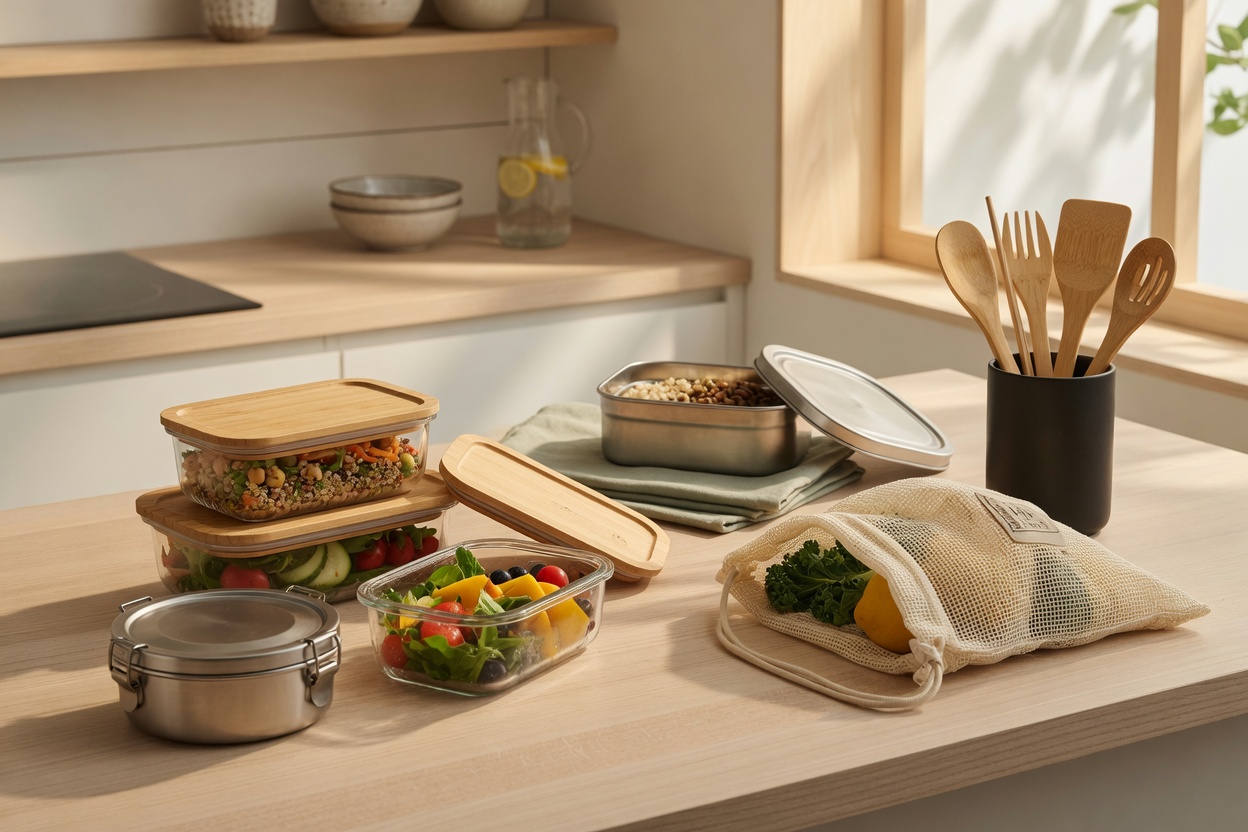
Kitchens combine single-use packaging with “durable” plastic tools that eventually crack. Containers and packaging are a major slice of municipal plastic waste streams in many countries. Reusable glass, stainless, and bamboo tools reduce both throwaway packaging and mystery leftovers that become food waste.
Source context: EPA — Containers and packaging data · EPA — Trash Free Waters
Swap map — what we recommend instead
Only buy when you need a replacement. Links go to BambooTide collections or Amazon listings we already curate. Affiliate disclosure applies.
| If you find… | Consider instead | Why we chose it | Link |
|---|---|---|---|
| Plastic toothbrush | Bamboo handle brush (Nuduko / Greenzla / Primals) | Renewable handle; replace head/brush on schedule; less plastic body waste | Oral Care Amazon |
| Plastic floss packs / picks | Mother Earth charcoal floss · SmartLife eco picks | Lower single-use plastic volume for a daily habit | Floss |
| Plastic tongue cleaner | Primals copper tongue scraper | Durable metal tool; one long-lived item vs disposables | Scraper |
| Disposable cotton rounds | Greenzla reusable pads | Washable pads cut continuous cotton + packaging waste | Beauty |
| Plastic food tubs / takeout | EcoPreps glass + bamboo lids · Umigy stainless set | Clear glass reduces forgotten leftovers; stainless travels well | Glass Steel |
| Plastic spatulas / tools | Bamboo cooking utensil set | Renewable material; gentler on cookware than worn plastic | Utensils |
| Plastic cutting board | Greener Chef XL bamboo board | Large prep surface; renewable board vs deeply scarred plastic | Board |
| Shopping / produce bags | Reusable tote / mesh bag (keep by door) | Bags are top litter items in coastal cleanups — reuse beats recycle | Kitchen |
Collection
Oral Care swaps →
Collection
Home & Kitchen reusables →
Collection
Beauty tools & barrier care →
Free game
Play Tide & Crown (cleanup themed) →
Sources & further reading
Verified for education. Open the originals for full context and updates.
NOAA — Plastics in the Ocean
Marine debris basics; plastics as the most common form; everyday item examples.
oceanservice.noaa.gov — Plastics in the oceanOcean Conservancy — International Coastal Cleanup
Global cleanup data; recurring top items (bottles, bags, wrappers, straws).
oceanconservancy.org — ICCIUCN — Plastic pollution issues brief
Global production scale; single-use items; land-based leakage pathways.
iucn.org — Plastic pollutionU.S. EPA — Containers & packaging / Trash Free Waters
Material-specific waste data and programs focused on reducing trash to waterways.
epa.gov — Containers & packaging · epa.gov — Trash Free WatersUNEP — Plastic pollution programme
Global plastic challenge; circular economy framing; waste projected to grow without system change. (Also: Turning off the Tap; Pollution to Solution reports.)
unep.org — Plastic pollution · Turning off the TapBambooTide is not a waste-management authority. Local recycling rules vary — check your municipality. Prefer reduce/reuse first; recycle correctly when that is the best remaining option.