Bamboo is often called a “miracle plant.” Some of that is marketing. Much of it is grounded in botany and material science: it is a grass that can grow extraordinarily fast, store carbon at high rates while standing, and replace plastic in everyday objects that would otherwise last centuries in a landfill or ocean.
This guide walks through why bamboo shows up so often in sustainable design — and where the hype needs a cooler head. Our goal isn’t perfection theater. It’s clearer choices.
A material humans trusted for millennia
Long before “zero waste” was a slogan, communities across Asia built lives around bamboo. Archaeological work on China’s Hemudu culture (c. 5000–4500 BCE) has documented early use of plant materials including bamboo in tools and structures. Across East and Southeast Asia, bamboo became paper precursors (bamboo slips), scaffolding, musical instruments, fencing, housing, and kitchenware — a renewable toolkit before industrial forestry.
In the Philippines, Japan, Indonesia, and beyond, bamboo craft traditions still shape daily life. That depth of use isn’t nostalgia; it’s a stress-test. Materials that fail don’t stick around for thousands of years of human preference.
Growth rates that change the math
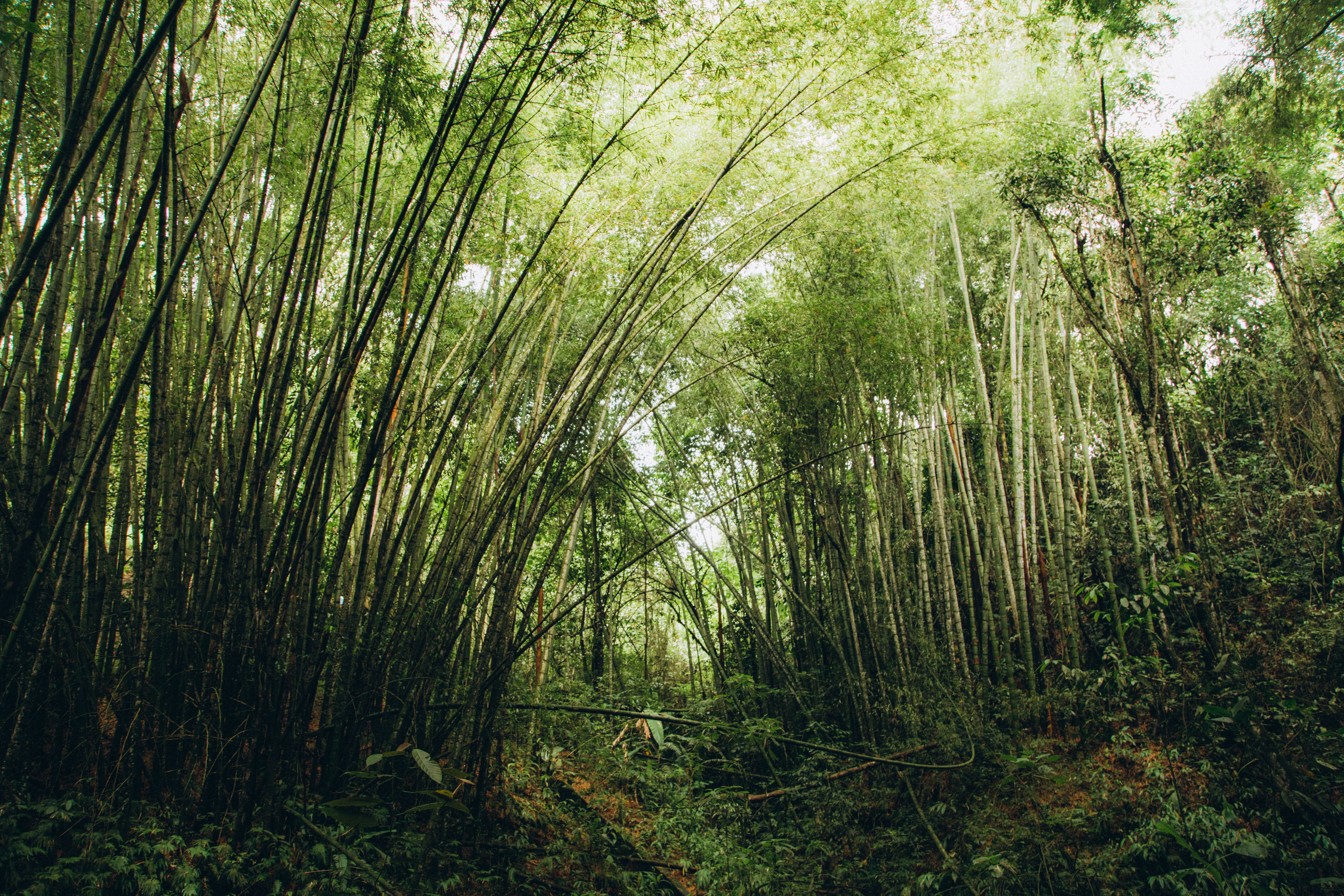
Bamboo’s headline trait is speed. Certain tropical species — often cited among the Bambusoideae — can put on extraordinary vertical growth under ideal conditions. Popular science and botanical references frequently note peaks near about a meter (roughly 3 feet) per day for the fastest recorded growth phases of giant timber bamboos, though day-to-day growth varies by species, climate, and soil.
More important for products than “world records” is maturity: many commercial bamboo species are ready for harvest in roughly 3–5 years, versus decades for hardwoods used in furniture and flooring. When bamboo is cut, the root system (rhizome network) typically remains alive and sends up new culms — so responsible harvest can resemble mowing a renewable crop more than clear-cutting a forest.
3–5
years to harvest maturity (many species)
Grass
botanically a grass, not a hardwood tree
Regrows
from rhizomes after careful cutting
Carbon, climate, and careful claims
Bamboo stands can sequester carbon quickly because they grow so fast and produce large amounts of biomass. Research and agency reviews often place well-managed bamboo among high-productivity plant systems for carbon uptake — sometimes comparing favorably with certain tree plantations on a per-area, per-year basis. The Food and Agriculture Organization of the United Nations (FAO) has long documented bamboo’s role in livelihoods, land restoration, and biomass production across Asia, Africa, and Latin America.
That does not mean every bamboo product is automatically “carbon negative.” Shipping, processing (especially energy-intensive manufacturing), coatings, and packaging all add emissions. The fairest claim is usually: as a renewable feedstock with high growth rates, bamboo can be a strong climate-smart material when grown and processed responsibly — not a free pass for overconsumption.
“Sustainability is no longer about doing less harm. It’s about doing more good.”
— Paul Polman, former CEO of Unilever (on corporate sustainability leadership)
The plastic problem bamboo can actually help with
Plastic is durable — which is excellent for a hip implant and terrible for a fork you use once. The OECD has estimated global plastic production in the hundreds of millions of tonnes annually, with mismanaged waste and leakage into the environment remaining a systemic problem. Many disposable items (bags, cutlery, swabs, brush handles) have short useful lives and long environmental afterlives.
Bamboo doesn’t “solve plastic.” It offers a practical substitution pathway for categories where:
- You need a rigid, lightweight, water-resistant-enough handle or utensil
- The item is frequently replaced (personal care tools, certain kitchenware)
- End-of-life can be composting or natural degradation of the plant portion (after removing non-bamboo parts like nylon bristles or metal)
The climate and ocean benefits of a single swap are small. The benefits of millions of people retiring plastic from high-churn categories are not. That’s systems math, not magic.
Honest caveats (because premium doesn’t mean uncritical)
Not all bamboo is equal
Sustainable bamboo depends on land use, labor practices, and processing chemistry. Prefer suppliers that avoid converting high-value ecosystems and that manage harvest without degrading soils. Certifications (when available) and transparent brands help, but so does buying less overall.
“Biodegradable” needs conditions
Raw bamboo can break down in compost-like conditions. A varnished board or a product glued with synthetics may not. Nylon toothbrush bristles still need removal before composting a handle. Clarity beats greenwashing.
Durability still wins
The most sustainable object is often the one you already own. Bamboo shines when it replaces something you would buy anyway — especially plastic disposables — not when it becomes another impulse purchase.
Where bamboo tends to shine in daily life
- Personal care tools — brushes, combs, swabs, and similar high-turnover items
- Kitchen basics — utensils, boards, and serving pieces that take wear well
- Textiles (when certified) — bamboo-derived fibers vary widely in processing impact; look into methods
- Construction & design — in appropriate climates and engineered forms, bamboo has serious structural applications
At BambooTide, we start from daily routines because that’s where habits live. Materials only matter if people will actually use them.
A mindset, not a monomaterial
Choosing bamboo is one lever among many: less waste, better energy choices, thoughtful food systems, and ocean-aware living. If bamboo becomes a gateway to asking better questions — What is this made of? How long will I use it? Where does it go next? — then it has done more than replace a handle. It has upgraded a habit of mind.
“The greatest threat to our planet is the belief that someone else will save it.”
— Robert Swan, polar explorer and environmentalist
Start with curiosity.
Choose materials that earn their place.
Then keep going.
Sources & further reading
- FAO — Bamboo and rattan resources and programmes
- FAO — World bamboo resources (assessment literature)
- OECD — Plastic pollution and plastics outlook research
- UNEP — Plastic pollution overview
- Botanical references on bamboo growth (e.g., Guinness World Records / peer-reviewed bamboo physiology papers on Phyllostachys and related genera — growth rates are species- and condition-dependent)
Notes: Growth and carbon figures vary by species, climate, and management. This article is educational and does not replace life-cycle assessment of a specific product.